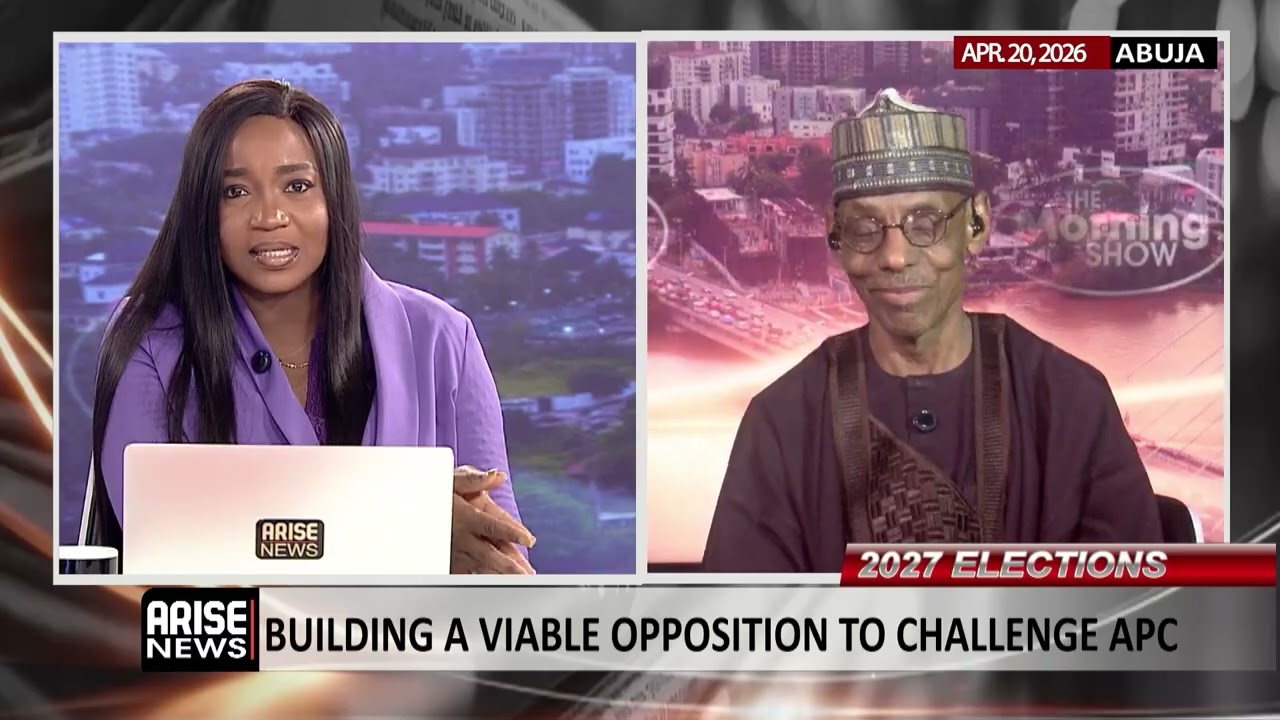

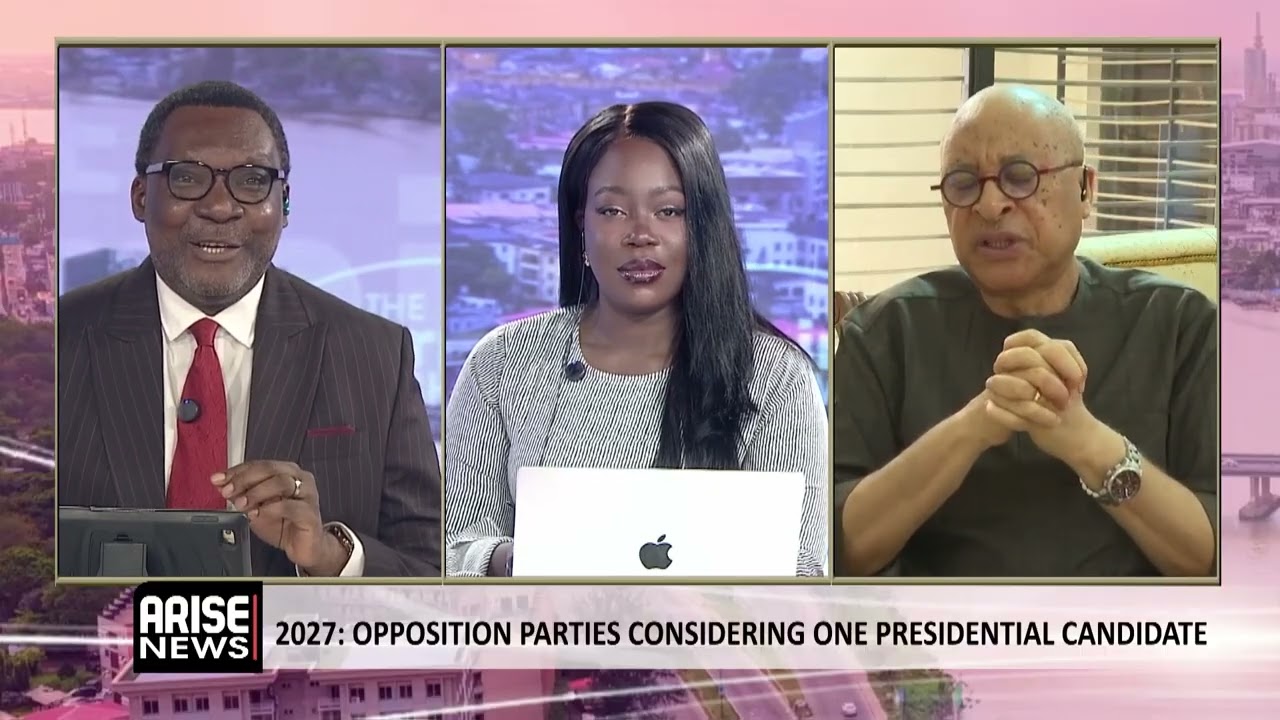
Professor Pat Utomi, Member of the African Democratic Congress (ADC) has stated that Nigeria may be on the brink of a dangerous democratic decline, warning of creeping authoritarianism and an emerging one-party dominance threatening the nation’s political future asserting that Nigeria is travelling down a very dangerous path.
Speaking In an interview with ARISE NEWS on Sunday, Utomi warned of an alarming political trajectory, describing the current situation as a commitment of opposition politicians to rescue Nigeria. “A commitment of opposition politicians to rescue Nigeria in the face of what seems to be creeping fascism, pressure to go into a one-party state.”
Utomi, said following the Ibadan opposition summit stating that the gathering as both symbolic and urgent. “You know, Ibadan holds a very special place in the history of democracy in Nigeria. I was very proud to return home there because I went to high school in Ibadan, just two or three miles from where that summit took place, And I remember very, very clearly the 1960s when I lived there. I remember the fact that, as your state governor said, Ibadan was a place where the fight for democracy saw its head.”
He explained that beyond symbolism, the summit demonstrated a willingness among political actors. “So it was an appropriate place to have that declaration about a commitment of opposition politicians to rescue Nigeria in the face of what seems to be creeping fascism, pressure to go into a one-party state, and all the shenanigans that have tried to disrupt multi-party democracy in Nigeria, with party activities being disrupted, the courts being used to abuse democratic processes, and all of that. It was very significant. It was symbolic to show that there are people who are willing to, you know, play down their egos, their ambitions, so that Nigeria may prevail, which is something that is so important to happen.”
Expressing concern over the state of Nigeria’s democracy, Utomi said the current system is deteriorating at an unprecedented level. “Some of us who not only came out of Ibadan in the 60s and saw the Agbekoya riots and all of that, but who were in the front line, if you may, of the fight for democracy in Nigeria after the June 12 elections we are voting, scandalised that our democracy is in a worse shape now than it has ever been.”
He further stressed the urgency of reversing the trend. “I’m proud to be associated with all that to say we must restore democracy in Nigeria now. So that statement was a statement about the importance of democracy in Nigeria. That’s the most important statement that was made in Ibadan.”
Highlighting the core message of the Ibadan Declaration, Utomi said. “So that statement was a statement about the importance of democracy in Nigeria. That’s the most important statement that was made in Ibadan. Nigerians are committed to a democratic process. We don’t want to instal kings. We don’t need KGBCs. We want a people concerned about the people.”

On governance and economic realities, Utomi delivered a scathing assessment of policies affecting ordinary Nigerians. “I told a story in Ibadan of filling up my tank on the express just as we were about to leave Lagos. And I realised that there was really some report, the PECM report on swimming in Nigeria. And the average Nigerian, 58% of us, earned 100,000 Naira a month or less. And it took nearly two and a half of a limit to fill my tank. And I thought to myself, stop stressing yourself. This only if you are still leaving every water bottle. It is the most evil kind of economy that there is. How can we live in a society that cares so little for the weak, for the small men?”
He argued that government policies have placed unbearable pressure on citizens. “I went to Ibadan determined, saying to people there, we must return government to the people. We must have a people-centred government that cares about the people, that does not look away and buy fancy cars and private jets and presidential jets when the people are dying. Because that’s what’s happening. The Nigerian people are being crushed by policies that we know don’t work.”
Drawing from past experience, Utomi criticised the return of economic strategies. “I’m sure you remember, I was one of the front line people explaining structural adjustment programmes. used things like the JCOF to tell the story they are telling today again, about how you will see the benefits down the line. And I saw it destroy the very business of development, our educational system, our healthcare system. And I say, how can this happen twice in my lifetime?”
He insisted that governance must be reoriented toward the needs of citizens. “We must have a people-centred government that cares about the people, that does not look away and buy fancy cars and private jets and presidential jets when the people are dying.”
On the emerging opposition coalition, Utomi acknowledged that while the process is still evolving. “We hear the Nigerian people saying they’ve had enough of the current order. We hear the Nigerian people saying, you politicians should get your act together. We want something new. We want something different. And I think that that is what is driving this effort towards policing. Because people have their ambitions and all of that. But the reality, this is why it’s called democracy. You know, the people, ultimately, as they groan, as they express their pains, even if they feel powerless in some circumstances, get to the politicians.”
He added that Nigerians are calling for a new direction in leadership and governance, emphasising. “Because people have their ambitions and all of that. But the reality, this is why it’s called democracy. You know, the people, ultimately, as they groan, as they express their pains, even if they feel powerless in some circumstances, get to the politicians. And their moral ambition will lead them to wanting to organise around this pain that people have for a different way.”
Addressing potential next steps if the coalition’s demands are not met, Utomi made it clear that. “Definitely an option on the table. There are many, many things that can be done. If you look at the list of those things, there are things that reinforce democratic order. All democracies respond to those kinds of things.”
On electoral credibility, he questioned the continued stay of the electoral umpire amid allegations of bias. “I am surprised that Professor Amuto is still in the position. If I were him, I am honestly telling you I would have resigned already. It is not even an indication of guilt or anything. Just out of decency to say, look, this is democracy. I am perceived as being a clog in the wheel. I may not be, but to give dignity to the democratic process, I withdraw, I resign.”
Utomi also raised broader concerns about Nigeria’s direction. “Nigeria is travelling down a very dangerous path. I can assure you. Do you think the president would have been ready two years ago, four years ago, five years ago? I don’t know why not.”
He further warned of escalating risks if current trends continue unchecked, adding. “I am predicting, as somebody who was schooled in this area, that if we don’t stop what is going on now, what we will have is worse than what you are describing and I was referring to.”
Questioning the legitimacy of political leadership, Utomi pointed to low voter turnout and electoral concerns. “indicators of a weakened democratic mandate, the current administration is lacking broad-based support, this is a minority government.”
Turning to the judiciary, he warned that its credibility is also at stake. “ History would judge its role in the current moment, failure to uphold justice could have lasting consequences for the nation, noting, if they don’t redeem themselves, history will count them as part of what ended the Nigerian dream.”
Utomi expressed cautious optimism that the opposition coalition could mark a turning point. “if leaders prioritise national interest over personal ambition the common good of all surpasses individual egos and ambitions.”
He ultimately described the Ibadan Declaration as more than a political statement. “A broader call to action aimed at reclaiming Nigeria’s democratic future, concluding that it represents a call for national liberation.”
Erizia Rubyjeana