
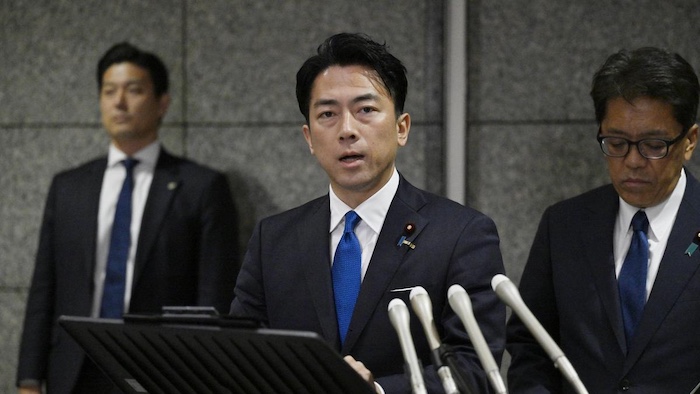
Japan will deploy medium-range surface-to-air missiles to Yonaguni Island, its westernmost territory near Taiwan, by March 2031, Defence Minister Shinjiro Koizumi announced Tuesday, marking the first time Tokyo has set a specific timeline for the missile system since it was first proposed in 2022.
Yonaguni sits just 110km (68 miles) from Taiwan and is visible from the island on a clear day. China claims self-ruled Taiwan as its own territory and has not ruled out force to “reunify” with it. Analysts warn that any attack on Taiwan could draw the US into a broader regional conflict, potentially involving allies such as Japan.
The announcement follows rising tensions after Prime Minister Sanae Takaichi’s parliamentary remarks in November suggesting Japan could deploy its Self-Defence Forces in the event of an attack on Taiwan comments that plunged relations with Beijing to their lowest level in years. In response, China has deployed warships, imposed restrictions on rare earth exports, curtailed tourism, cancelled concerts, and even reclaimed pandas from Japanese zoos.
Koizumi said the Yonaguni missile unit will be equipped with medium-range surface-to-air missiles capable of intercepting aircraft and incoming missiles. With a range of about 50km and 360-degree coverage, the system can track up to 100 targets simultaneously and engage up to 12 at once.
While China has yet to respond to the new timeline, its displeasure was clear during Koizumi’s November visit to Yonaguni, when Beijing accused Japan of “creating regional tension and provoking military confrontation.” Within days, Chinese drones flew near the island, prompting Japan to scramble fighter jets.
The Yonaguni missile announcement came a day after China imposed export curbs on 20 Japanese companies, citing national security concerns. Analysts say it underscores Japan’s willingness to escalate its defence posture in a region where Beijing is increasingly assertive.
Yonaguni is far from a passive outpost. Over the past decade, Japan has transformed the island into a strategic military site, hosting coastal surveillance operations and a 160-strong Self-Defence Force garrison. An electronic warfare unit, capable of disrupting enemy communications and radar, is scheduled to be operational in fiscal year 2026 (April 2026–March 2027).
Koizumi emphasised that while the missile deployment is currently planned for fiscal 2030, the timing “may change depending on the progress of future facility improvements.” Nevertheless, the plan signals Japan’s growing readiness to defend its territory and assert its strategic position in East Asia.
With Takaichi’s recent landslide parliamentary victory, she now has political room to double down on strengthening Japan’s defence capabilities. Analysts view the Yonaguni missile deployment not merely as a tactical move, but as a broader statement of Japan’s front-line strategy in the face of rising regional instability.
Erizia Rubyjeana