
China is set to outline this week how it plans to turn recent breakthroughs in artificial intelligence (AI), robotics and space into large-scale industrial and capital market momentum, signalling the next phase of its technology race with the West.
The country’s top leadership will present its annual government work report and budget plans at the opening of the National People’s Congress (NPC) on Thursday, alongside the outline of the 15th Five-Year Plan for 2026–2030, a sweeping blueprint setting priorities for industrial policy. The reports are expected to indicate which industries will receive generous funding and policy support.
Last year, AI models were mentioned for the first time in official documents, while embodied intelligence—the technology powering humanoid robots—also received attention.
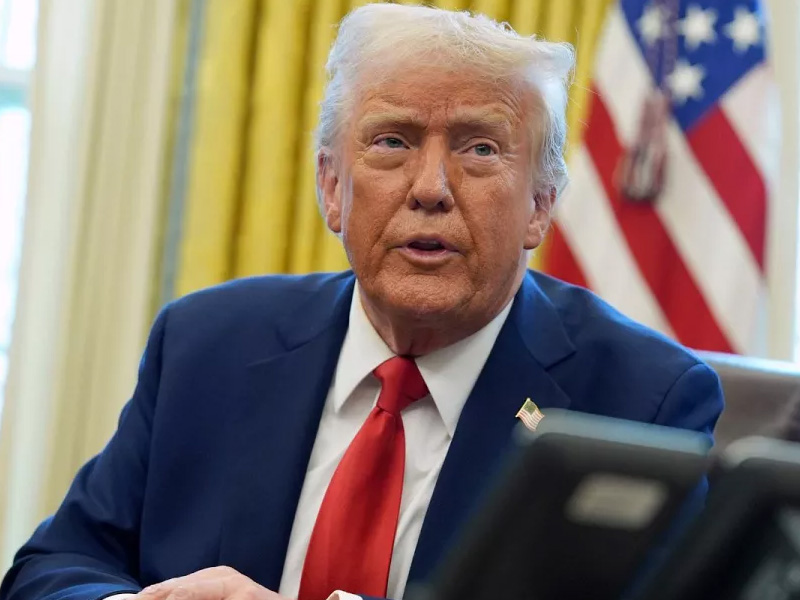
The NPC session comes just weeks before a planned meeting between Chinese President Xi Jinping and U.S. President Donald Trump from March 31 to April 2, where technology controls and supply chains are expected to feature prominently.
It also marks a year since Chinese AI developers drew global attention for sudden leaps in capability despite tight U.S. restrictions on access to advanced chips and chipmaking equipment. DeepSeek, the Chinese startup whose viral AI model release last year triggered a global tech share selloff, is widely expected to launch a next-generation model in the coming days.
“The shock is over,” said Alfredo Montufar-Helu, managing director at Ankura Consulting in Beijing. “Now there is an expectation of what China can come up with next.”
Policymakers face the challenge of converting individual breakthroughs into systematic gains across manufacturing, logistics and energy. Shujing He, senior analyst at advisory firm Plenum China, said authorities are likely to push “AI-plus manufacturing” by using large state-owned enterprises as anchor adopters, drawing startups and specialised suppliers into real-world deployment.
However, the strategy could reshape China’s industrial structure. Shin Nakamura, president of Japanese manufacturer Daiwa Steel Tube Industries, said the AI push will likely favour large, capital-intensive producers, while smaller firms may face structural constraints. “The gap between large enterprises and SMEs in China will widen, and consolidation will accelerate,” he said.
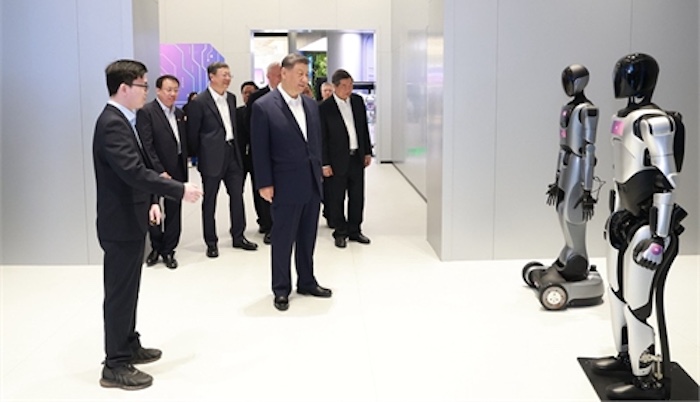
The five-year blueprint is expected to emphasise embodied intelligence. Last month, China showcased humanoid robots performing dance and martial arts routines on the CCTV Spring Festival Gala, the nation’s most-watched TV programme.
“Mechatronics—especially balance, motor control and dynamic locomotion—has improved dramatically over the past 12 months,” said Mike Nielsen, executive at computer vision firm RealSense, which collaborates with Chinese robotics company Unitree. “China has shown major momentum, with early-stage platforms now demonstrating much higher agility and stability.”
Yet regulators have warned about low differentiation among more than 150 domestic humanoid robot developers, suggesting consolidation may arrive faster than in previous strategic sectors like electric vehicles.
Space is another test of Beijing’s ability to translate research into industrial strength. Private launch firm LandSpace plans another recovery attempt this year for its reusable Zhuque-3 rocket, following its December success as the first Chinese company to test an orbital-class reusable launcher.
Despite such advances, emerging industries alone are unlikely to generate the investment needed to sustain 5% GDP growth, according to U.S. research firm Rhodium Group. Analysts expect Beijing to continue relying on exports while prioritising sectors with more immediate commercial impact, such as autonomous driving.
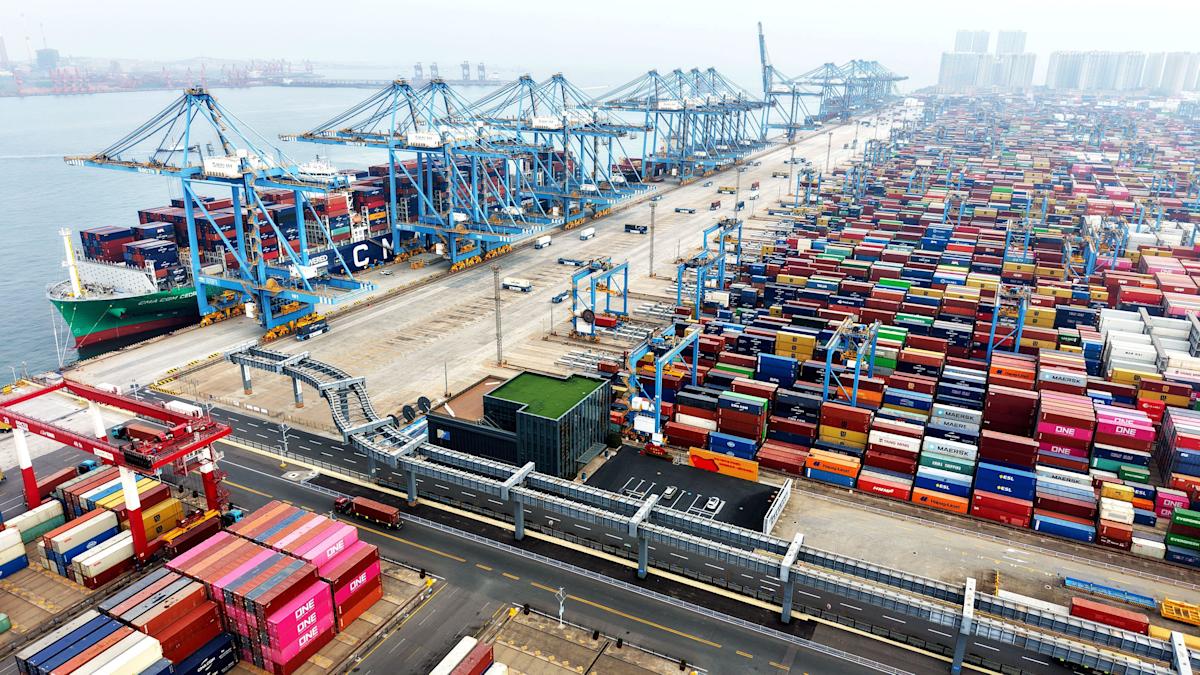
The five-year plan will also reveal how China intends to safeguard the industrial foundations underpinning its technology push, as supply chains increasingly become instruments of geopolitical leverage. Over the past year, China has expanded export controls on rare earths and low-end semiconductors, disrupting global supply chains.
Doug Friedman, CEO of U.S. biomanufacturing institute BioMADE, said other crucial sectors, including industrial chemicals, are also exposed. “Right now, we’re neck and neck,” he said of the U.S. and China. “Whoever doubles down over the next three to five years is going to gain a real lead.”
China’s State Council and industry ministry did not respond to requests for comment.
Boluwatife Enome