
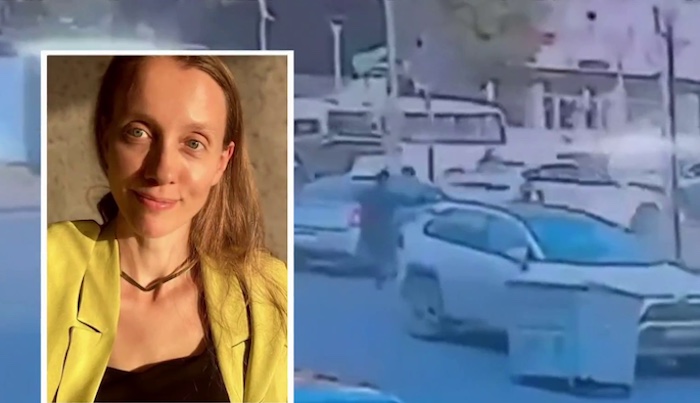
Abducted American journalist Shelly Kittleson has been released by an Iran-backed Iraqi armed group after days in captivity, marking the end of a tense episode that drew international concern over press safety in conflict zones.
Kittleson, who was kidnapped on March 31 from a street corner in Baghdad, regained her freedom on Tuesday following a decision by Kataib Hezbollah, a powerful militia group long accused of targeting foreign nationals. In a statement, the group said it freed the journalist on the condition that she must “leave the country immediately.”
Confirmation of her release came from Marco Rubio, who said the United States was relieved by the development and was working to ensure her safe departure from Iraq. Rubio also acknowledged the role of Iraqi authorities, the FBI, and the US Department of Defense in securing her freedom.
Iraqi officials disclosed that Kittleson had been held within Baghdad prior to her release, although her exact location after regaining freedom was not immediately made public. The circumstances surrounding her release pointed to a negotiated outcome, with militia insiders indicating that several detained members of the group could be freed in exchange.
The militia, while not previously admitting responsibility for the abduction, suggested its decision to release Kittleson was influenced by what it described as the “patriotic stances” of outgoing Iraqi Prime Minister Mohammed Shia al-Sudani. It also stated that such an action would not be repeated.
The case had exposed the complex and opaque structure of armed groups operating in Iraq. Security sources revealed that efforts to secure Kittleson’s release were initially hampered by difficulties in reaching key commanders within Kataib Hezbollah, many of whom had reportedly gone underground amid fears of being targeted.
Officials said communication channels were fragmented, with intermediaries struggling to establish contact with the militia’s leadership. Despite these challenges, negotiations eventually progressed, culminating in her release after several days of uncertainty.
Kittleson, 49, is a seasoned journalist known for her extensive reporting across the Middle East, including Iraq and Syria. Like many freelance correspondents, she operated without the institutional backing of major media organisations, often working under high-risk conditions.
US officials had reportedly warned her of security threats prior to her trip, but she chose to continue her work in Iraq. Her abduction involved multiple vehicles, with Iraqi authorities stating that one of the cars used by the kidnappers crashed during a pursuit near al-Haswa in Babil province before she was transferred to another vehicle.
The incident has renewed concerns over the safety of journalists operating in volatile regions, particularly freelancers who lack structured security support. Kataib Hezbollah has previously been linked to kidnappings, including that of Elizabeth Tsurkov, who was abducted in Baghdad in 2023 and later released in 2025.
The broader security environment remains fragile, with Iran-backed militias continuing to operate across Iraq and launch attacks on US interests in the region, particularly in the context of ongoing tensions linked to the US-Israel conflict with Iran.
Erizia Rubyjeana