
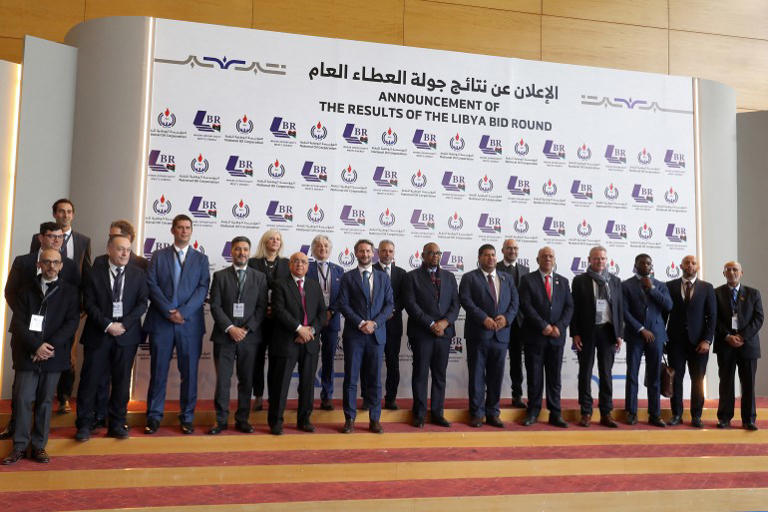
Libya on Wednesday granted new oil exploration and production licences to several foreign companies for the first time in 17 years, signalling renewed efforts to revive its energy sector after years of political turmoil.
The hydrocarbon-rich North African nation is aiming to attract major global energy firms back into its oil industry while increasing daily production by 850,000 barrels over the next 25 years.
Among the successful bidders were US energy giant Chevron and Nigeria’s Aiteo. Consortiums involving Spain’s Repsol and British Petroleum, Repsol and Hungary’s MOL Group, as well as Eni North Africa in partnership with QatarEnergy, were also awarded licences.
Announcing the results, Masoud Suleman, head of Libya’s National Oil Corporation (NOC), described the development as a turning point for the sector.
“This marks a return of trust and the resumption of institutional work in one of the country’s most important sectors after a long time of pause and challenges,” Suleman said.
He pledged that the NOC would uphold “integrity, transparency, equal opportunities” and work to “maximise national returns” as the country reopens its energy sector to international investment.
Libya currently produces about 1.5 million barrels of oil per day and holds Africa’s largest proven oil reserves, estimated at 48.4 billion barrels. However, the industry has been repeatedly disrupted by insecurity and political divisions since the NATO-backed uprising that toppled longtime leader Muammar Gaddafi in 2011.
Suleman stressed that the new licences go beyond routine administrative decisions. “Today’s announcements are not merely technical or administrative,” he said. “They are part of a broader national path that aims for prosperity, growth, the return of normalcy.”
The licensing round followed the opening of bids for 20 oil blocks — 11 of them offshore — although none of the offshore blocks received offers. Five blocks were ultimately awarded on Wednesday, with Suleman confirming that another licensing round is expected later this year.
The move comes amid growing investment interest in Libya’s energy sector. Just last month, the country signed agreements valued at more than $20 billion with TotalEnergies and ConocoPhillips to support long-term production growth over the next quarter century.
With fresh commitments from international players, Libya appears to be positioning its oil industry as central to its economic recovery and long-term stability.
Melissa Enoch